Available now · free
Choose five readings
Use Seminar Packs to select readings, add a discussion question and share the pack without requiring students to sign in. Check the source and file before sharing.
Build a Seminar PackTeaching · research · collaboration
Work with a Traveller-led Foundation to examine Ireland’s history through original records, community accounts and research. We help you build teaching around questions students can investigate for themselves.
For lecturers, course leaders, researchers and student groups.
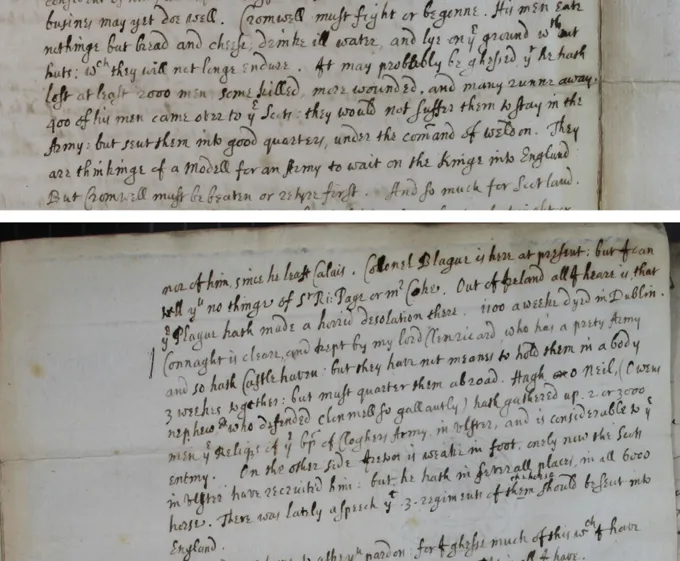
The National Archives, Kew · SP 18/11 f2. Source and credit
Read the handwriting beside the transcript. Ask who wrote it, who would read it and what it can tell us.
Examine the letter and transcriptTraveller-ledOur knowledge belongs in the conversation.
Sources you can inspectKeep the author, context and reference in view.
Public learning stays freeTailored work for your institution is agreed and priced separately.
Colleges · universities · independent researchers
Start with free public readings, then build a seminar around a question students can answer from the evidence. Our existing tools help you select and share material. Bespoke modules, teaching and research support are separately agreed services.
Listening uses an installed local voice when available. The full introduction is printed above.
Page tools checked against the held site on . Planned feeds are not live.
Available now · free
Use Seminar Packs to select readings, add a discussion question and share the pack without requiring students to sign in. Check the source and file before sharing.
Build a Seminar PackAvailable now · free
Use the Irish Studies page for existing seminar material and Library readings. A public reading activity is not an accredited course or a promise of tutor assessment.
Explore Irish StudiesAvailable now · free
Follow a reviewed source trail. Distinguish an original, a transcription and a translation; two reading formats are not two independent witnesses.
Open an evidence trailAvailable now · free
Find material by subject, then inspect its author, date and available files. The catalogue includes different kinds of evidence; not every record has a downloadable file.
Search the research collectionA practical seminar sequence
Keep the task manageable and make room for different ways of taking part.
Identify who is speaking, when and for what purpose. Read a short passage aloud if helpful.
Keep the page, paragraph or recording time beside any quotation. Separate the source’s words from your explanation.
Discuss what the source supports, what it cannot establish and what another account might add.
The Council hub and Rights Monitor link to current Library resources and describe future monitoring tools. The proposed live feeds, submission builder and collaboration rooms are not connected. Use a checked document with a date, rather than presenting a planned dashboard as current evidence.
Choose a named place or topic. Open the search immediately, or remember these public filters here for another visit. This is a keyword search of held material, not a complete county index or a live alert.
Saving searches is optional. If these controls are unavailable, search the Library or browse catalogue records.
Saved filters may be visible to other people using this browser. We do not save free-text questions, reading notes or account details here. This is separate from My Reading List and does not synchronise between devices.
Forget only the portal searches saved in this browser? Your Reading List and student work will stay.
Optional saved-search tools are not ready. Your saved data is unchanged.
A clear next step
No live feed is connected here yet. Planned cards describe the intended service; they are not empty news results and do not mean that nothing has happened. The current Library and linked public records remain available.
Browse available resourcesTry a place name on its own, a shorter topic or the report’s title. A missing result does not establish that no record exists. Some catalogue entries do not have a held file.
Browse the whole LibraryUse your browser’s Back button to return here. The source preview and citation note remain on this page. You can try the source again or tell us which public link failed. A failed load does not mean the document has been withdrawn.
Report the source problemPaid teaching services · agreed before work begins
Begin with your students, the subject and the time available. These are starting points for a conversation, not fixed packages.
Discuss a question in Irish and Irish Traveller history, work through selected sources and give students room to challenge an interpretation.
Develop a sequence of source studies for an existing module, a short programme or a longer partnership with your institution.
Discuss your question, find relevant held material and identify what the available sources do—and do not—establish.
Review how Irish Traveller history appears in your teaching and discuss whose accounts are included, credited or missing.
Programme levels
Agree the reading, support and learning goals with us. These examples help us plan the right level of study; they do not offer a qualification or enrol you on a course.
Introductory
Short, supported readings with plain-English context. Identify a writer, distinguish an original quotation from an explanation and ask a question the evidence can answer.
A possible task Compare a short historical passage with a credited Traveller account.
Intermediate
Read longer sections, examine context and compare different kinds of evidence. Develop an argument that separates what a source says from your interpretation.
A possible task Build a discussion around several readings and explain where they agree or differ.
Advanced
Examine methods, attribution and the limits of an archive. Consider alternative interpretations and identify what further evidence a claim would need.
A possible task Prepare a source-based research proposal with a clear account of uncertainty.
Subject areas can include Irish and Irish Traveller history, colonialism and decolonial scholarship, original state papers, archaeology, and the responsible interpretation of scientific research. No single study or historical label determines a people’s identity.
Use the Rathangan trail to compare a nineteenth-century printed record, Traveller oral history and a map in a 45-minute session.
Open the seminar planFree public resources · no account needed
You do not need to buy an institutional service or sign in to explore these public readings and teaching tools.
Find held documents, recordings and original sources, with their credits and context.
Browse the Library A reading group in one linkChoose five readings, add a discussion question and share the pack with your class.
Build a seminar pack Questions to explore togetherUse the existing seminar readings to begin a conversation about history and evidence.
Explore Irish Studies Originals · editions · contextSee how a historical source reaches us through a transcription, translation or later edition.
Explore the source trailsBegin with a printed account of Rathangan and Biddy Collins’s account of the Nine Mile Road. The preview identifies both sources and the class exercise.
Open the two seminar readingsThe map’s publication date is not the recording date. The printed entry and the spoken account answer different questions; one does not stand in for the other.
See the passages and discussion instructionsPreview metadata checked against the held source on . This is not a live source-status check.
Paired readings: Samuel Lewis, A Topographical Dictionary of Ireland, second edition, volume II (1847), p. 447, Rathangan; and Biddy Collins, Nine Mile Road, Pavee Roads Home: Edenderry Oral Histories Map. The recording is undated; the map was published on 4 September 2020. These are separate accounts, brought together in the Foundation’s Irish Studies seminar.
Source page: Open the source and its references.
Choose a problem type to prepare the right contact link. Nothing is sent here. Please enter any personal details only in the contact form.
No report has been created or sent.
The next page is the existing enquiry form. Its own submission result will tell you whether the message was accepted; opening it does not send a report.
Paid institutional services
Commissioned seminars, tailored module development and research support are paid services. We agree the scope, availability and fee before a booking is confirmed. Browsing the public Library remains free.
Enquire about an education partnershipThe main button selects “Teaching”. Choose Research or Partnership above for a different enquiry. You can change the subject on the form; enquiries are reviewed as capacity allows.
Before you enquire
Yes. The public Library, Irish Studies page and Seminar Packs are available without an institutional booking. Check each source’s credits and reuse terms before reproducing it in another publication or course pack.
We can discuss material and activities that fit your course. Your institution remains responsible for its programme approval, assessment, academic credit and student support. We do not offer accreditation through this page.
Tell us about the group and its access needs. A session can be planned around discussion, supported reading or a short source exercise. Any alternative assessment should be agreed with the institution and the learner.
A longer collaboration can be planned around your timetable and resources. Duration, delivery, tutor involvement and fees need agreement; the examples on this page do not reserve a tutor or enrol a student.